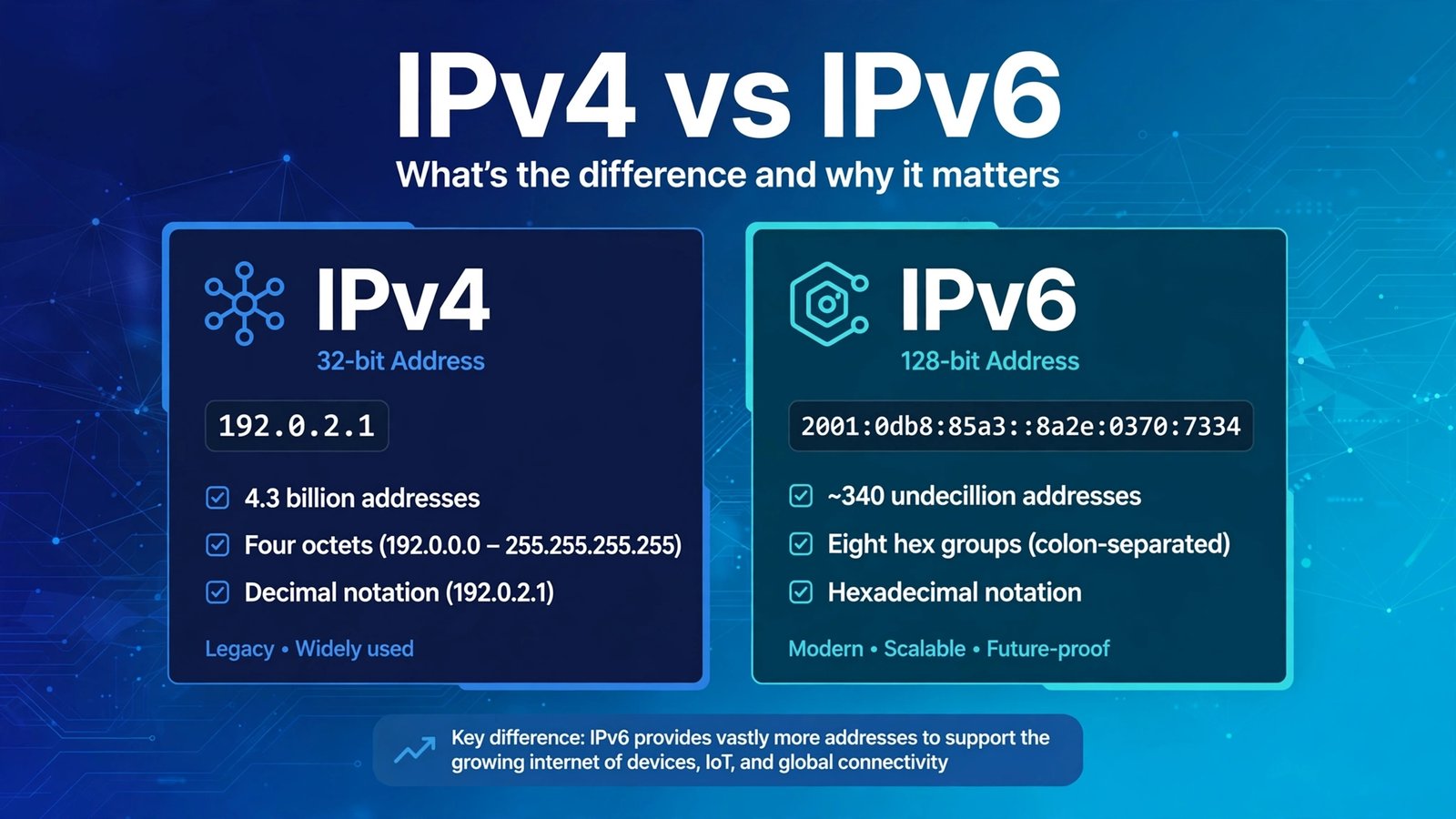
You may have noticed two types of IP addresses on our tool: IPv4 and IPv6. What is the difference between them and why does it matter?
IPv4 is the older version, launched in 1983. It looks like this: 192.168.1.1. It uses 32-bit addresses and has about 4.3 billion unique addresses. Because so many devices now use the internet, including phones, computers, and smart TVs, we have almost run out of IPv4 addresses.
IPv6 is the newer version, created to solve this problem. It looks longer, like this: 2402:4000:1234::1. It uses 128-bit addresses and has 340 undecillion addresses. That is enough for trillions of devices for many years to come.
Which one do you have? Most modern ISPs, including Dialog Axiata in Sri Lanka, now give you both IPv4 and IPv6. Our tool automatically detects which version you are using right now.
IPv6 is faster and more secure in many cases because it has built-in encryption and better routing. But some older websites still use only IPv4. Having both ensures better connectivity and compatibility.
You do not need to change anything on your device. Your phone or computer chooses automatically which version to use. Just checking which version you have helps you understand your internet connection better and troubleshoot issues.
Use our IP Pulse Europe tool on the homepage to check if you are on IPv4 or IPv6 instantly.